Why Do Live Casino Studios Need Controlled Illumination Instead of Room Lights?
When it comes to live casino studios, lighting is far from a mere afterthought. Unlike typical room lighting, studios require controlled lighting to maintain consistent visibility, ensure a professional multi-camera production, and optimize streaming performance—especially under the stringent constraints of mobile-first platforms. This blog post delves into the why behind using controlled illumination over regular room lights in live casino productions, drawing insight from industry leaders like Hardware Times, technology innovators such as MRQ, and guidelines from the Society of Motion Picture and Television Engineers (SMPTE).
The Foundation: Multi-Camera Studio Production Needs
Live casino studios are essentially complex multi-camera environments. Each camera captures different angles—dealer hands, player perspectives, and the overall table environment. To achieve a seamless broadcast, lighting cannot merely “fill the room” but must be precisely tailored, eliminating unpredictable shadows and avoiding reflections from shiny surfaces like laminated cards or glass tables.
By relying on typical room lights, studios risk introducing inconsistent pools of brightness or glare that vary from camera angle to camera angle. This inconsistency can cause:
- Uneven exposure across shots causing jarring visual jumps on live feeds.
- Increased post-processing demands, potentially raising latency.
- Viewer distractions, impacting player engagement in online casino apps or mobile websites.
MRQ, known for its sophisticated streaming technologies, often highlights that uniformity in lighting reduces the synchronization effort during broadcast and encoding, smoothing out multi-camera feeds and decreasing stream degradation.
Case in Point: Synchronizing Multiple Camera Feeds
Multi-camera setups use color grading and exposure balancing to ensure the feeds stitch together well for live viewers. However, when light sources are uncontrolled—such as fluctuating room lights or natural daylight filtering in—achieving a dependable baseline becomes impossible.
This is where controlled lighting shines. Studio lights designed for broadcast provide consistent intensity and color temperature, a crucial requirement SMPTE stresses in its production standards. Without this, the video signals become difficult to match, and compression artifacts can multiply—a major headache for encoding hardware tasked with low-latency streaming.

Lighting and Visual Consistency: The Keystone for Casinos
Controlled lighting guarantees what studios call “lighting continuity.”em> This stability is absolutely crucial under the intense scrutiny of live casino productions where even minor visual distractions can cause trust issues among players.
Imagine a dealer’s hand repeatedly reflecting a ceiling light or minor flickering due to inconsistent room lighting—the faith in randomness and fairness may waver. This is why:
- Controlled illumination avoids reflections by directing light angles carefully around reflective surfaces.
- Uniform lighting maintains color accuracy, ensuring cards, chips, and branded elements show true to life.
- Ambient lighting can be tuned to a precise color temperature (e.g., 5600K daylight balanced) to maintain natural visuals.
Hardware Times features several case studies on lighting rigs optimized for such precise conditions. They emphasize how even minor room light interference forces constant camera adjustments, causing distractions both upstream—during capture—and downstream—during encoding and player viewing.
Mobile-First Streaming Constraints
Many live casino players today access games via mobile websites or **online casino apps** on phones and tablets with varying display capabilities. This mobile-first trend has major implications for how live streams are produced, especially lighting:
- Reduced frame sizes and bitrates: Mobile streams often compress more aggressively, which amplifies noise or flickering caused by inconsistent lighting.
- Smaller screens mean less tolerance for erratic highlights or shadow play.
- Adaptive streaming technologies (HLS, DASH) depend on stable image quality to switch seamlessly between bitrates.
In other words, quality issues from fluctuating or poorly controlled illumination sources become magnified on mobile platforms. Controlled lighting ensures that each frame fed to encoding pipelines starts with a clean, stable image—greatly improving compression efficiency and user experience.
Encoding and Compression: Why Lighting Matters Downstream
Modern encoding tools, such as those advocated by MRQ, rely on visual predictability to apply optimal compression algorithms. High contrast lighting or random glare spikes from room lights create hard-to-compress digital artifacts and force higher bitrates for the same perceived quality.
Controlled lighting mitigates these problems by:
- Reducing dynamic range spikes that cause encoders to waste bits.
- Providing color and exposure consistency that simplifies color-space conversion and chroma subsampling.
- Lowering the risk of flicker or washout that triggers error-resilient encoding modes.
In effect, controlled studio illumination helps deliver low-latency, high-quality streams vital for real-time casino betting and interaction.
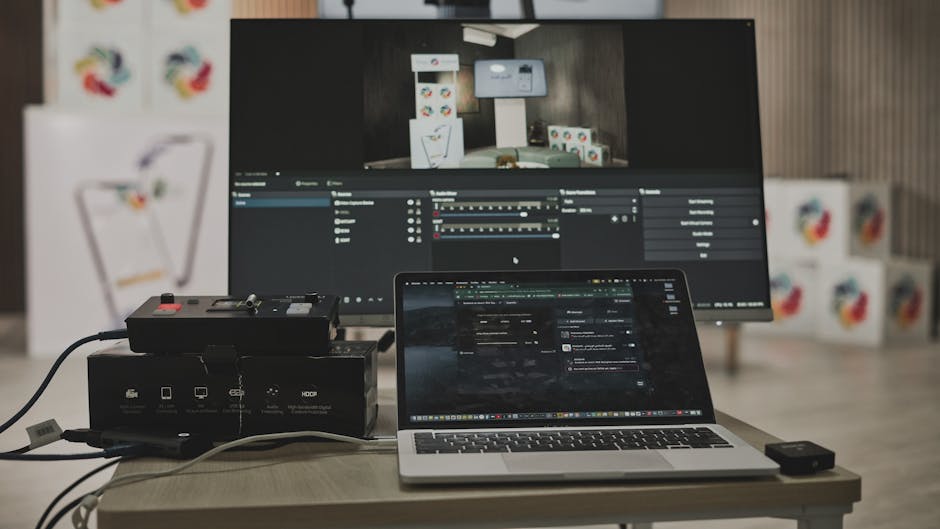
What Happens If a Lighting Fixture Overheats at Hour 9?
Here’s a practical question any broadcast engineer worth their salt will ask: “What happens when this box overheats at hour 9?” Controlled illumination rigs designed for live casino studios always incorporate redundancy and cooling in their design.
Some key safeguards include:
- Using LED fixtures with lower heat output and stable color temperature over time.
- Implementing backup lighting circuits that auto-switch in seconds.
- Employing environmental monitoring tools—similar to those covered by Hardware Times—to alert operators before any performance degradation.
This ensures uninterrupted lighting quality with zero visual dips, supporting SMPTE’s principle of “never breaking the illusion for the viewer.”
Conclusion
Live casino studios demand much more than just “some light.” Controlled illumination is essential to providing consistent visual quality across multiple cameras, ensuring fairness perception, and supporting the unique constraints of mobile-first streaming and encoding workflows. Room lights are simply too unpredictable and create challenges live dealer studio that cascade from capture to end-user experience.
Thanks to industry expertise from platforms like Hardware Times, innovations by MRQ, and technical standards from the Society of Motion Picture and Television Engineers, studios can confidently invest in lighting setups that keep live casino streams sharp, consistent, and trustworthy.